China National Institute of Standardization Issues Draft Amendment for Room Air Conditioners
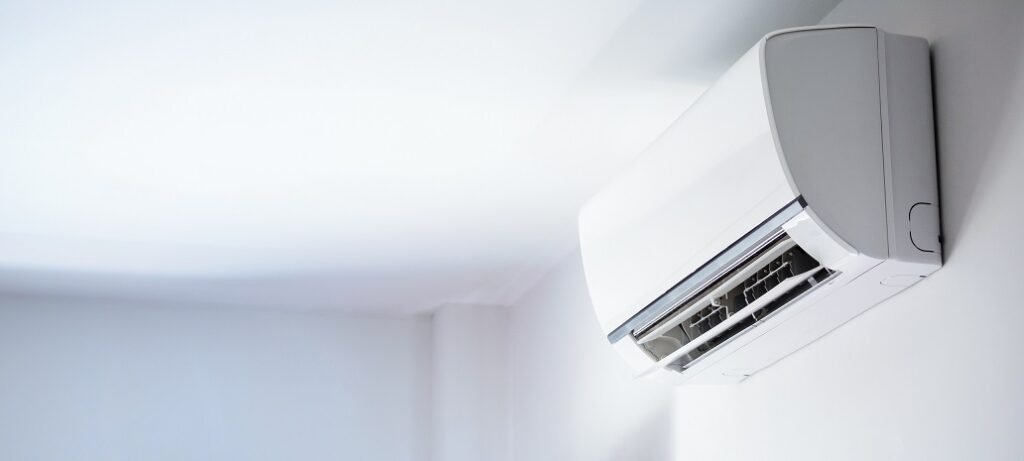
On May 15, 2026, the China National Institute of Standardization released the draft amendment to the mandatory national standard Minimum Allowable Values of Energy Efficiency and Energy Efficiency Grades for Room Air Conditioners (GB 21455) to solicit public comments. The deadline for submitting comments is July 12, 2026.
This draft amendment introduces crucial new definitions, including the Dynamic Annual Performance Factor (DAPF) and the Global Warming Potential (GWP) of refrigerants used in air conditioners. Furthermore, energy efficiency grading has been restructured into three levels based on the type of refrigerant (with Grade 1 being the highest), and standby power limits have been tightened.
Notably, the “GWP of refrigerants,” which was not mentioned in the 2019 edition (GB 21455-2019), has now been linked to the determination of energy efficiency grades, adopting the Intergovernmental Panel on Climate Change (IPCC) reports as the evaluation baseline. Additionally, indicators concerning heating capacity under ultra-low temperature environments have been newly incorporated, a design intended to drive practical improvements in energy-saving performance.
Scope and Exclusions
| Applicable Products | Excluded Products |
|---|---|
|
|
Introduction of Energy Efficiency Grading and Refrigerant GWP
Shift from Uniform Evaluation to Environmental Impact Linkage
Regarding the grading of energy-saving performance, the standard shifts away from the 2019 edition’s approach of “uniform evaluation regardless of refrigerant”. Instead, performance tiers are now explicitly linked to the environmental load (GWP value) of the refrigerant.
Energy Efficiency Tiers and the Role of MEPS
- Three-Tier System: Energy efficiency is classified into three grades from Grade 1 to Grade 3, with Grade 1 representing the highest level of efficiency. Specific required values, such as the DAPF for each grade, are meticulously prescribed based on cooling capacity and product type.
- MEPS Threshold: The baseline value for “Grade 3,” the lowest grade in this standard, is established as the Minimum Energy Performance Standard (MEPS) for market circulation. The manufacture and sale of products failing to meet this baseline will be prohibited.
Adoption of GWP100 and Multidimensional Matrix Indicator Values
- Official Benchmark: The 100-year Global Warming Potential (GWP100) values are adopted as the official reference figures for common refrigerants used in air conditioners.
- Matrix Structure with Smart Functions: Distinct threshold criteria are established depending on whether a refrigerant’s GWP100 value is “150 or less” or “over 150”. These tiers are further cross-referenced with the presence or absence of smart grid response functions. Through this intersection of “GWP” and “smart functions,” the specific target values that products must satisfy for each grade (Grades 1–3) are detailed individually for different types of air conditioners.
- Ultra-Low Temperature Heating Entry Value: As part of this comprehensive indicator matrix, a “threshold value for ultra-low temperature heating” has been newly integrated. This regulatory threshold varies depending on the product’s rated cooling capacity, a sub-classified design aimed at guaranteeing a baseline increase in actual heating capacity under extreme cold environments.
Standby Power Limits (For Cooling Capacities of 4500W or Less)
Standby power limits are established based on whether the air conditioner features smart control capabilities:
| Product Category | Standby Power Limit |
|---|---|
| Products WITHOUT smart control functions (or those where the function can be completely turned off) | ≤3W |
| Products WITH smart control functions where the function cannot be completely turned off | ≤12W |
Note: Smart functions (smart connectivity features) include, but are not limited to, sensors, wireless communication modules (such as Wi-Fi and Bluetooth), voice modules, display screens, and remote-control modules.
Implementation of the Standard
While the official effective date of the standard is not explicitly specified in this draft, a 24-MONTH grace period from the effective date will be granted for the sale of products manufactured or imported prior to said effective date.
EnviX Analysis
Compared to the 2019 edition (GB 21455-2019), the energy efficiency grading framework has been streamlined from the conventional five levels down to three levels. Furthermore, the introduction of the refrigerant GWP100 value as a classification baseline marks a historical first, positioning it as an indispensable indicator for determining energy efficiency tiers by demanding different criteria depending on the specific refrigerant utilized.
Additionally, to standardize requirements for smart home appliances in the unfolding AI era, “smart grid signal response capability” and “smart control functionality” have been introduced as independent baseline criteria. This creates a transparent, regulated boundary that distinguishes smart appliances from conventional, non-smart air conditioning units.
The original text of the draft standard is accessible at the following URL (Simplified Chinese):
https://www.cnis.ac.cn/bydt/bzyjzq/gbyjzq/202605/t20260518_62928.html
Related Reference Links
For the Global Warming Potential (GWP) values of common refrigerants used in air conditioning, please refer to the Fourth Assessment Report adopted by the IPCC:
IPCC Fourth Assessment Report: Climate Change 2007
https://archive.ipcc.ch/publications_and_data/ar4/wg1/en/ch2s2-10-2.html
IPCC Global Warming Potential Values
https://ghgprotocol.org/sites/default/files/2024-08/Global-Warming-Potential-Values%20%28August%202024%29.pdf