China promotes the use of green energy
During 2025–2026, China intensively introduced a series of major policies centered on renewable electricity consumption and green energy usage. These policies cover key areas such as market-oriented electricity price reforms, the refinement of the Green Electricity Certificate (GEC) system, rigid evaluation of consumption responsibilities, upgrades to direct green energy connection models, and unified accounting rules for non-fossil energy consumption.
On the surface, these policies aim to address the increasingly severe grid integration and consumption pressures following explosive growth in wind and solar installed capacity. However, the deeper driver stems from the step-by-step transmission and rigid constraints of national top-level strategic goals:
- The 15th Five-Year Plan outline explicitly sets a binding target for non-fossil energy consumption to reach 25%.
- In August 2025, the Comprehensive Assessment and Evaluation Measures for Carbon Peak and Carbon Neutrality issued by the General Office of the CPC Central Committee and the General Office of the State Council listed the proportion of non-fossil energy consumption as one of five key control metrics, evaluated alongside targets like carbon intensity reduction.
- In June 2026, the National Development and Reform Commission (NDRC) and the National Energy Administration (NEA) officially issued the 15th Five-Year Plan for the Construction of a New Energy System, establishing quantitative targets for the “15th Five-Year Plan” period: wind and solar power to exceed 50% of total installed capacity, and non-fossil energy generation to reach 50% of total electricity generation. This provides the top-level design and action framework for all green energy policies.
I. Current Status: Scale Surges Alongside Consumption Pressures
In 2025, national new installed capacity for wind and solar power exceeded 430 million kW (120 million kW of wind power and 318 million kW of solar power, a year-on-year increase of 22%). Cumulative grid-connected wind and solar capacity reached 1.84 billion kW, representing 47.3% of the country’s total power generation capacity and historically surpassing thermal power [1].
In 2025, national wind and solar generation grew by 25% year-on-year, accounting for 22% of total generation, while total renewable energy generation met 38.5% of national electricity consumption. Crucially, incremental renewable energy generation covered all net additions in national electricity demand, meaning that new energy consumption driven by economic growth was fully supported by green energy for the first time.
Explosive Growth in the GEC Trading Market
In 2025, 2.947 billion GECs were issued nationwide, and 930 million were traded, marking a 1.08-fold year-on-year increase. By technology source, conventional hydropower accounted for 35.7%, wind power 35.26%, and solar power 22.81%.
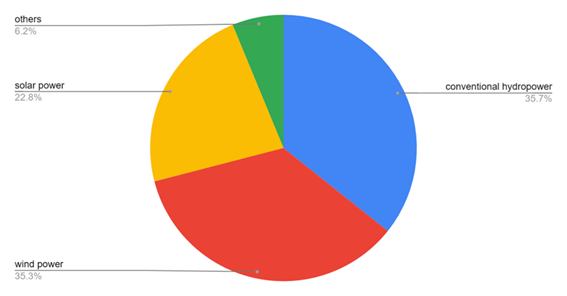
GEC trading prices showed a distinct upward gradient:
- The average price for GECs tied to 2025 generation reached 57 RMB/certificate.
- Prices varied significantly by production vintage: 2024 vintage certificates averaged just 51 RMB, 2025 certificates reached 5.71 RMB, and Q1 2026 certificates rose to 7.76 RMB [2].
- Regionally, the top five issuing regions were Yunnan, Sichuan, Inner Mongolia, Xinjiang, and Hubei. The top ten purchasing regions were concentrated in eastern hubs like Guangdong, Zhejiang, and Jiangsu, establishing a clear pattern of cross-provincial green energy resource flows.
Rising Grid Absorption Pressures
Rapid capacity expansion has introduced severe integration challenges. In March 2025, national utilization rates for wind and solar fell by 3.5 and 2.8 percentage points year-on-year, respectively. Solar utilization rates dropped below 90% in six provinces: Hebei, Inner Mongolia, Shaanxi, Gansu, Qinghai, and Tibet [3].
II. Issuance of New Policies: Systematic Restructuring from Pricing to Accounting
Between 2025 and 2026, the national government issued key framework documents across market mechanisms, GEC foundations, consumption obligations, direct connection models, and consumption accounting rules. These policies serve as institutional mechanisms to implement the 25% non-fossil energy consumption target and broader carbon neutrality goals, establishing a structured framework for green energy consumption.
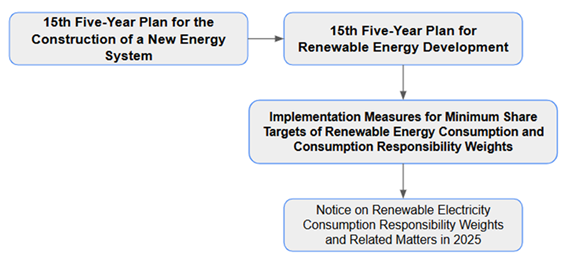
Table 1: Major Green energy Policies (2025–2026)
| Document Name | Document No. | Core Points | Target Audience | Date |
|---|---|---|---|---|
| Notice on Deepening Market-Based On-Grid Tariff Reform for New Energy to Promote High-Quality Development | Fa Gai Jia Ge [2025] No. 136 | Full market entry for new energy; contract-for-difference settlement | Legacy/New new energy projects | Feb 2025 |
| Opinions on Promoting High-Quality Development of the Green Electricity Certificate Market | Fa Gai Neng Yuan [2025] No. 262 | “Dual uniqueness” GEC positioning; mandatory + voluntary consumption | Key industries, data centers | Mar 2025 |
| Notice on Renewable Electricity Consumption Responsibility Weights and Related Matters in 2025 | Fa Gai Ban Neng Yuan [2025] No. 669 | Binding evaluation for consumption responsibility weights | Provinces, electrolytic aluminum/steel/cement/polysilicon, new national data center hubs | Jul 2025 |
| Notice on Promoting the Orderly Development of Direct Green energy Connections | Fa Gai Neng Yuan [2025] No. 650 | Single-user direct green energy connection | New energy plant + single end-user | May 2025 |
| Notice on Promoting the Orderly Development of Multi-User Direct Green energy Connections | Fa Gai Neng Yuan [2026] No. 688 | Multi-user direct green energy connection | Park-level “one-to-many” setups | May 2026 |
| Notice on Printing and Distributing Guidelines for Non-Fossil Electricity Consumption Accounting (Trial) | Fa Gai Neng Yuan [2026] No. 622 | Unified accounting for non-fossil electricity consumption | Provinces/cities, power end-users | Jun 2026 |
| 15th Five-Year Plan for the Construction of a New Energy System | Fa Gai Neng Yuan [2026] No. 884 | Top-level blueprint; sets targets for installed capacity, generation, and consumption shares | All sectors | Jun 2026 |
| 15th Five-Year Plan for Renewable Energy Development | Fa Gai Neng Yuan [2026] No. 1067 | Sets main line of “expanding capacity, improving quality, and reliable substitution”; defines four target areas | All sectors | Jul 2026 |
| Implementation Measures for Minimum Share Targets of Renewable Energy Consumption and Consumption Responsibility Weights | Decree No. 42 (2026) | Institutionalizes consumption responsibility; rigid evaluation for key sectors | Provinces, key energy-consuming sectors | Published Jun 2026, Effective Aug 2026 |
Key Policy Dimensions
Top-Level Guidance for the New Energy System:
As the overarching blueprint, the 15th Five-Year Plan for the Construction of a New Energy System established three core metrics: a 25% non-fossil energy consumption share, >50% wind and solar capacity share, and 50% non-fossil generation share. It also deployed models like direct green energy connections, compute-power & electricity coordination, and incremental distribution network access.
Building on this, the NDRC and NEA issued the 15th Five-Year Plan for Renewable Energy Development on July 6, 2026. This sector-specific plan details targets such as 1.8 billion tons of standard coal equivalents in renewable consumption, 3.5 billion kW in total installed capacity, a 1.5-fold increase in non-electric applications compared to 2025, and an average firm capacity credit of 8% for wind and solar.
Market-Based Pricing for New Energy:
Fa Gai Jia Ge [2025] No. 136 mandates that new energy projects enter electricity markets, determining prices via market transactions and settling differences through contract-for-difference mechanisms. Using June 1, 2025, as the cutoff between legacy and new projects, market pricing replaces fixed feed-in tariffs.
GEC “Dual Uniqueness” and Dual-Track Consumption:
Fa Gai Neng Yuan [2025] No. 262 positioned GECs as the sole proof of environmental attributes and the sole credential for green electricity consumption in China. It set targets for a complete transaction system by 2027 and international market application by 2030.
- Mandatory Track: Steel, non-ferrous metals, building materials, petrochemicals, chemicals, and data centers must meet minimum green energy consumption shares matching national averages by 2030 (>=80% for new data centers in national hubs).
- Voluntary Track: Encourages state-owned enterprises and government agencies to increase green energy procurement and report metrics under ESG frameworks.
Rigid Institutional Consumption Requirements:
Fa Gai Ban Neng Yuan [2025] No. 669 made consumption weights binding for key sectors. Decree No. 42 (2026) upgraded this framework by creating “minimum renewable consumption targets” for heavy industries (with non-compliance subject to public reprimands and credit sanctions), incorporating non-electric uses (green hydrogen, ammonia, methanol, biofuels), using GECs as primary accounting tokens, and establishing tiered provincial evaluations effective August 1, 2026.
Unified Accounting Rules and Full GEC Coverage:
The Guidelines for Non-Fossil Electricity Consumption Accounting (Trial) established three accounting methods (physical, transactional, and allocated) covering all non-fossil power. Except for directly verified physical flows, local and corporate accounting relies primarily on GECs. Meanwhile, new rules expanded GEC eligibility to non-public grid projects (off-grid systems and behind-the-meter installations), issuing tradeable certificates for grid-fed power and non-tradeable certificates for self-consumed power.
III. Policy Trends and Impacts
Transition from Flexible Guidance to Rigid Enforcement:
Across 2025 and 2026, consumption rules shifted from administrative targets to enforceable mandates backed by credit sanctions and cross-sector penalties. Unifying accounting rules removed data barriers between renewable consumption assessments and carbon emission accounting, making the compliance value of green energy explicit.
International Framework Alignment:
Unconditional recognition of Chinese GECs by organizations like RE100 provides export-oriented enterprises with globally credible consumption credentials. With the implementation of mechanisms like the EU Carbon Border Adjustment Mechanism (CBAM), direct green energy connections offer strong compliance value for physical sourcing.
IV. Challenges and Outlook
Main Challenges
- GEC Price Volatility: Average GEC prices rose from 57 RMB in 2025 to 7.76 RMB in Q1 2026 (briefly exceeding 8 RMB). Rapid price increases may dampen voluntary corporate procurement. Conversely, older 2024 vintage certificates dropped to 1.51 RMB, creating a >5x price gap due to policy applicability limitations. In April 2026 alone, the NEA issued 237 million GECs across 1.81 million projects (177 million tradeable), indicating accelerating supply. Continued supply expansion may exert downward pressure on prices, impacting project revenue expectations.
- Cross-Provincial Grid and Market Barriers: Transmission capacity bottlenecks remain a primary constraint. In 2025, curtailment remained concentrated in the “Three-North” region, which faced an estimated 15% capacity deficit relative to demand centers in Eastern China. While cross-provincial standalone GEC trading represented 20% of total standalone GEC volume, physical transmission capacity constraints persist.
- International Mutual Recognition Uncertainties: Despite conditional RE100 recognition, foreign-invested firms report challenges regarding long trace-back verification periods and exclusions of certain legacy GEC vintages. Additionally, while CBAM recognizes physical direct connections, its stance on mixed GEC-plus-grid models remains unclear.
Development Trends
- Expansion of Mandatory GEC Demand: Achieving a 25% non-fossil energy share by 2030 under the 15th Five-Year Plan will drive substantial growth in mandatory GEC demand across heavy industries and digital infrastructure. Full GEC coverage will simultaneously ensure adequate tradeable market liquidity.
- Convergence of Carbon, Power, and Certificate Markets: Unified accounting rules establish common data standards across carbon credits, green certificates, and power market transactions. The NEA expects explicit rules for mutual recognition between GECs and national carbon market allowances by 2027, moving toward a “single identity, single verification” framework for environmental rights.
V. Execution as the Critical Test
Between 2025 and 2026, China established a structured policy framework spanning top-level targets, market pricing, accounting rules, consumption mandates, and direct connections. With the strategic goals of the 15th Five-Year Plan defined, GECs integrated into national energy accounting, and market coordination frameworks initialized, the core architecture is largely complete.
Moving forward, policy effectiveness will depend on practical execution across four key areas:
- Establishing stable price discovery mechanisms amid supply-demand shifts.
- Resolving inter-provincial physical transmission and market trading bottlenecks.
- Managing grid stability, backup power, and cost-allocation mechanisms for direct green energy connections.
- Monitoring and enforcing compliance across local governments and industrial sectors.
References
- [1] Source: National Energy Administration, Statistical Data (Feb 12, 2026).
- [2] Source: National Energy Administration, China Green Electricity Certificate Development Report (2025); Regular Press Conference (Apr 2026).
- [3] Source: Direct Green energy Connections Expand to Multi-User Setups as Localized Consumption Enters a New Stage, NEA Power Reliability Management and Engineering Quality Supervision Center (Jun 2026).