Indonesia Drafts Non-Halal Regulation for Chemical Products, Cosmetics & More
On February 13, 2026, the Indonesian Halal Product Assurance Agency (BPJPH) notified through WTO/TBT regarding the “Draft Regulation of the Halal Product Assurance Agency regarding the Forms and Methods of Non-Halal Labeling,” along with a public comment period open till March 14, 2026. This draft regulation mandates the display of specific labels on products and packaging for food, medicines, cosmetics, and chemical products marketed in Indonesia that are “non-halal” (does not comply with halal standards under Islamic law).
Obligated Products
Obligated products are defined as such:
“Food, beverages, medicines, cosmetics, chemical products, biological products, genetically engineered products, as well as consumer goods that are worn, used, or otherwise utilized by the public”.
Non-Halal Conditions
Non-Halal products do not need to obtain certification the way halal products are required to through certification agencies. Instead, the draft regulation requires non-Halal labeling for products that meet either of the following conditions:
- Non-Halal Ingredient Conditions: The product contains specific animals or plants, alcohol, microorganisms, genetically modified materials, parts of the human body, or impurities (such as excrement, blood, or urine).
- Non-Halal Production Conditions: The product comes in contact with non-halal products at the production site or during the general production process, including manufacturing, packaging, transport, or testing.
Labeling
There are two types of non-halal labels, which must be displayed as required:
“Contains Ingredients Derived from Pigs” Label: For food and beverage products containing ingredients derived from pigs or porcine derivatives.
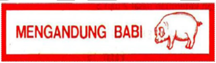
“Non-Halal” Label: For food and beverage products containing non-halal ingredients other than those from pigs or that meet non-halal production conditions, and products other than food and beverages that meet non-halal ingredient conditions or non-halal production conditions.

Exemptions
The regulations have provided the following exemptions from the labeling requirement:
- Products that are too small in size to realistically display a label (instead provide similar labeling on product pamphlets or other related medium)
- Cosmetics that are refilled at consumer’s request and packaged in the same container (documents proving the refill material is halal must be submitted to the agency)
- Products not sold at retail (documents proving the product ingredients are halal must be submitted to the authorities)
- Food and beverage businesses with “Pig” in its Trademark Name
- For companies already displaying their own “non-halal” labels, a three-year grace period from the effective date of the regulation will be granted.
Download the WTO/TBT notification from link below:
https://eping.wto.org/en/Search?countryIds=C458%2CC360%2CC702%2CC608%2CC356%2CC586%2CC144%2CC050&viewData=G%2FTBT%2FN%2FIDN%2F184
EnviX Comment
The draft regulation fails to provide specific product examples, while the definitions for “chemical products” and “consumer goods that are worn, used, or otherwise utilized by the public” are phrased in a way that allows for broad interpretation. Furthermore, the exemption for “products not sold at retail” hints at the exemption of B2B products as a whole. These provisions should be revised into clearer definitions upon the official publication of the regulation.