China Officially Releases Revised Mandatory National Standard Specifying Prohibited Substances in Cosmetics

On July 30, 2026, the National Medical Products Administration (NMPA) and the State Administration for Market Regulation (SAMR) of China officially promulgated the mandatory national standard Cosmetics—General Safety Requirements (GB 7916-2026). This standard serves as a revision of the Hygienic Standard for Cosmetics (GB 7916-1987). It sets forth general requirements, raw material specifications, and finished product standards for cosmetics, while also establishing mandatory provisions for packaging materials, labeling, storage, and transportation. Marking the first major overhaul in roughly 40 years, this revision comprehensively updates the regulatory framework—from the title of the standard and raw material guidelines to packaging/labeling criteria and prohibited substance lists. The revised standard will enter into force on January 1, 2028, and will apply to cosmetics manufactured and operated within mainland China. As a mandatory national standard, compliance is strictly required.
Scope of Application
This standard applies to cosmetics* produced and operated* within China. However, it does not apply to cosmetics manufactured exclusively for export outside China.
- * Operation: While not explicitly defined in this standard or its governing legislation, this term generally refers to engaging in commercial activities for profit, including distribution, wholesale/retail sale, and importation.
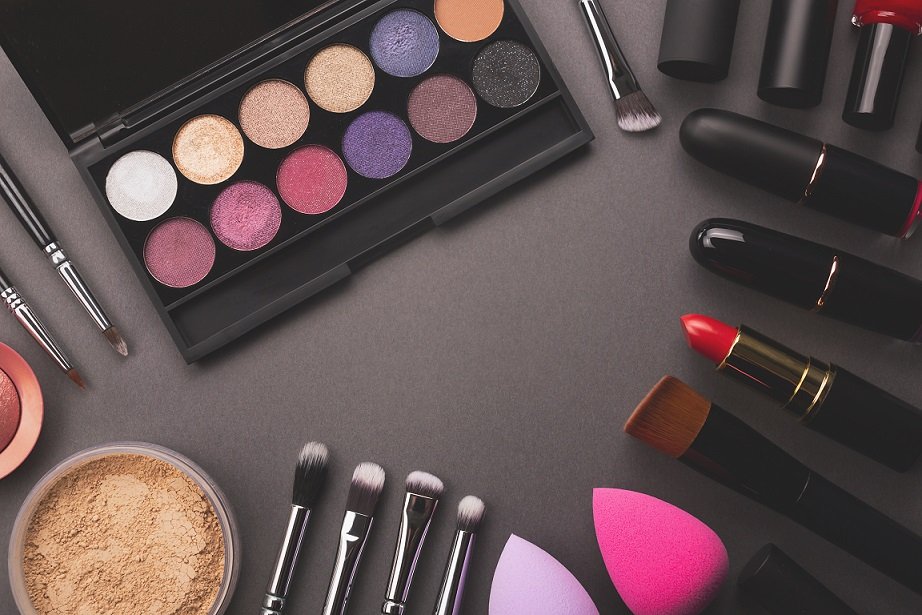
- * Cosmetics: Under the terms and definitions of this standard, “cosmetics” refers to daily chemical products intended to be applied to human external surfaces (such as skin, hair, nails, and lips) by rubbing, spraying, or other similar methods for the purposes of cleansing, protecting, beautifying, and modifying.
Note: Under the previous standard (GB 7916-1987), products applied to the “oral mucosa” were categorized as cosmetics; however, oral mucosal products have been removed from the scope of this revised standard.
Key Revisions
In addition to updating the scope of application outlined above, the principal revisions include the following:
- General Requirements (Article 5.1)
The broad, descriptive provisions concerning appearance and safety in the 1987 version have been superseded by concrete, enforceable requirements:
- Manufacturing requirements: Ensure end-to-end process control and traceability throughout manufacturing, and perform mandatory pre-release batch inspections.
- Pre-market requirements: Conduct safety assessments prior to product launch and marketing.
- Children’s cosmetics requirements: Strict compliance with this standard is mandatory.
- Raw Material Requirements (Article 5.2)
Provisions governing raw materials have been made substantially more specific and stringent:
- Identification: Cosmetic ingredients must be accurately identifiable based on essential technical data (e.g., standard chemical name and CAS registry number).
- Prohibited substances & impurities: Substances listed in Annexes A and B must not be intentionally added. For technically unavoidable impurities, companies must comply with national limitation standards where established; in the absence of national limits, a safety assessment must be performed to confirm they pose no hazard to human health.
- Restricted and functional substances: Restricted ingredients, preservatives, sunscreen agents, colorants, and hair dyes listed in the Safety and Technical Standards for Cosmetics must fully satisfy the requirements set forth therein.
- Product Requirements (Article 5.3)
Specific thresholds have been established for microbiological limits and harmful substances in finished products:
- Microbiological limits: A total count threshold for molds and yeasts has been newly introduced. Furthermore, the upper limit for total bacterial counts has been substantially lowered for cosmetics applied to the ocular region (including skin around the eyes, eyelashes, and eyebrows) and the lips.
- Harmful substances limits: Operating on the premise that trace levels represent technically unavoidable impurities, cadmium, 1,4-dioxane, and asbestos have been newly designated as restricted targets. Additionally, allowable limit values for existing parameters—lead, arsenic, and methanol—have been significantly reduced.
- Packaging Materials (Chapter 6)
The former high-level requirement specifying that packaging merely be “non-toxic and clean” has been upgraded to a more rigorous standard: packaging materials must not adversely affect the safety or properties of the cosmetic, and substances migrating from packaging into the formulation under normal conditions of use must not endanger human health.
- Labeling (Chapter 7)
Rather than prescribing individual, standalone labeling particulars within this standard, the requirement has been revised to mandate direct compliance with Instructions for Use of Consumer Products—General Labelling for Cosmetics (GB 5296.3).
- Lists of Prohibited Substances (Annexes A.1 and B.1)
Because substances from the “Inventory of Prohibited Ingredients for Cosmetics” in the Safety and Technical Standards for Cosmetics (2015 Edition) have been incorporated into this standard, the list of prohibited substances has expanded markedly from 359 to 1,297 items. Furthermore, Annex B.1 newly adds “Prohibited Plant (and Animal) Substances in Cosmetics,” encompassing 109 substances.
In addition, because Article 5.2 (“Raw Material Requirements”) now explicitly mandates compliance with the Safety and Technical Standards for Cosmetics for restricted ingredients, preservatives, and sunscreen agents, the former Annex 3 (“Restricted Substances”), Annex 4 (“Restricted Preservatives”), and Annex 5 (“Restricted UV Absorbers”) from the 1987 standard (GB 7916-1987) have been deleted.
Effective Date
This revised standard will take effect on January 1, 2028. However, cosmetics manufactured or imported prior to the effective date may continue to be sold until the expiration of their designated shelf life.
EnviX Commentary
During the nearly 40 years since GB 7916-1987 was promulgated and enacted, China’s cosmetics industry has expanded rapidly, and its safety supervision and regulatory systems have steadily evolved. This comprehensive revision is intended to bring the standard into alignment with modern industry development and regulatory oversight requirements. It operates within the statutory framework of the Cosmetics Supervision and Administration Regulation (CSAR) and formally integrates technical specifications from related regulations and norms, such as the Safety and Technical Standards for Cosmetics, directly into the mandatory national standard. Consequently, the changes primarily focus on consolidating and harmonizing pre-existing technical requirements. Violations of this mandatory standard will be subject to administrative penalties pursuant to the Cosmetics Supervision and Administration Regulation.
The official source text of this revised standard is available in Simplified Chinese at:
https://openstd.samr.gov.cn/bzgk/std/newGbInfo?hcno=FC110F762C7601FBFC5DBCCD9F5C6C85