South Korea proposes amendment to ban manufacture and import of Dechlorane Plus and UV-328 with specific exemptions
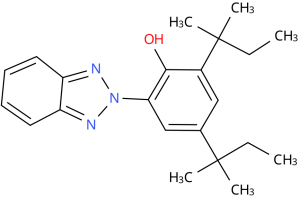
On March 19, 2026, South Korea’s Ministry of Climate, Energy and Environment (MCEE) issued an administrative notice of a proposed amendment to the Regulations on Types of Persistent Pollutants and Specific Exemptions (MCEE Notice No. 2026-278) in order to incorporate into domestic legislation the decisions adopted at the eleventh meeting of the Conference of the Parties (COP-11) to the Stockholm Convention on Persistent Organic Pollutants (the Stockholm Convention), held in early May 2023. The proposed amendment adds three substances newly listed under Annex A (Elimination) to the Stockholm Convention and sets out the specific exemptions for those substances. In addition, the proposed amendment revises the existing specific exemptions for “perfluorooctanoic acid (PFOA), its salts and PFOA-related substances” and “decabromodiphenyl ether (decaBDE).”
1. Background of the amendment
At COP-11, it was resolved that the three substances listed below be added to Annex A to the Convention. In response, the Korean government issued the administrative notice proposing amendments to the Regulations on Types of Persistent Pollutants and Specific Exemptions to add these substances to the domestic regulatory list set out in Appendix 1 to the Regulations.
- Methoxychlor: Added to Annex A without any specific exemptions.
- Dechlorane Plus: Added to Annex A with time-limited exemptions for specific applications.
- UV-328: Added to Annex A with time-limited exemptions for specific applications.
2. Specific exemptions for persistent pollutants
Under the proposed amendment, the applications of Dechlorane Plus and UV-328 eligible for specific exemptions are set out in Appendix 2, as shown below. Manufacture, import, export, and use that do not fall within those applications will, in principle, be prohibited. In addition, as shown in the table below, the proposed amendment also revises the specific exemptions for PFOA and decaBDE.
| No. | Chemical substance | Activity | Specific exemption | Exemption expiry date | Newly added / Amended |
|---|---|---|---|---|---|
| 2017-27 | Decabromodiphenyl ether, BDE-209 | Manufacture | – Additives in plastic housings and parts used for heating home appliances, irons, fans, immersion heaters that contain or are in direct contact with electrical parts (provided that fire retardancy standards are met at concentrations lower than 10% by weight of the part) | February 20, 2025 | N/A |
| Use | – Parts for legacy vehicles (provided that such parts falling under paragraph 2 of Part IX of Annex A to the Stockholm Convention shall be subject to paragraphs 3 and 4 of Part IX) and parts for aircraft for which applications for approval were submitted on or before December 2018 and approvals were granted on or before December 2022 – Additives in plastic housings and parts used for heating home appliances, irons, fans, immersion heaters that contain or are in direct contact with electrical parts (provided that fire retardancy standards are met at concentrations lower than 10% by weight of the part) |
February 20, 2025 | Amended (portion underlined) | ||
| 2019-30 | Perfluorooctanoic acid (PFOA), its salts and PFOA-related substances | Manufacture | – Oil- and water-repellent textiles to protect workers from hazardous liquids harmful to their health and safety | June 2, 2026 | N/A |
| Use | – Oil- and water-repellent textiles to protect workers from hazardous liquids harmful to health and safety – Semiconductor manufacturing – Photosensitive coating agents for films – Invasive and implantable medical devices – Manufacture of polytetrafluoroethylene (PTFE) and polyvinylidene fluoride (PVDF) (gas and water treatment membrane filters, medical textile membranes, heat-exchange equipment for industrial waste, industrial sealants for prevention of volatile organic compounds (VOCs) and PM2.5) – Manufacture of fluorinated ethylene propylene (FEP) for industrial electric wire and power cable production – Manufacture of fluoroelastomers for O-rings, V-belts, and plastic accessories for automotive interiors |
||||
| -Fire suppression foams already installed in mobile and fixed systems | June 2, 2030 | Amended (portion underlined) | |||
| 2023-33 | Dechlorane Plus | Manufacture | N/A | [Month] [Day], 2031 *Five years from the effective date |
Newly added |
| Use | – Aerospace applications – Space and defense applications – Medical imaging equipment, and radiation therapy equipment and facilities |
Newly added | |||
| – Spare parts for and repair of finished articles under paragraphs 2 and 3 of Part XI of Annex A to the Stockholm Convention | Newly added | ||||
| 2023-34 | UV-328 | Manufacture | N/A | Newly added | |
| Use | – Automotive parts such as bumpers, radiator grilles, spoilers, vehicle garnishes, roof modules, soft and hard tops, trunk lids, and rear window wipers (including all land vehicles such as passenger vehicles, motorcycles, agricultural and construction vehicles, and industrial trucks) – Industrial coatings used for heavy-duty applications of vehicles, engineering machinery, rail vehicles, and large steel structures – Mechanical separators for blood collection tubes – Triacetyl cellulose (TAC) films for polarizers – Photo printing paper |
[Month] [Day], 2031
*Five years from the effective date |
Newly added | ||
| – Spare parts for finished articles under paragraphs 2 and 3 of Part XII of Annex A to the Stockholm Convention | Newly added | ||||
* “[Month] [day], 2031” indicates that the exact effective date has not yet been determined.
Furthermore, for the substance assigned unique number 2009-21—Perfluorooctane Sulfonic Acid (PFOS), its salts and Perfluorooctane Sulfonyl Fluoride (PFOSF)— the expiry date of the specific exemption for its use has been extended from June 2, 2026, to June 2, 2030.
3. Labeling requirements for molded articles containing persistent organic pollutants (POPs)
This proposed amendment focuses on the addition of new substances and the specification of applications eligible for exemptions, but it does not set out any labeling requirements or methods for products containing POPs.
With respect to the labeling requirements for articles (products) containing POPs, Article 13 of the Persistent Organic Pollutants Control Act provides that: “Those who intend to manufacture, export, import, or use banned persistent pollutants pursuant to the proviso to paragraph (1) shall comply with the standards for control prescribed by Presidential Decree, such as labeling on their containers or packages for safety control.” Under the proposed amendment, products containing POPs that are exceptionally permitted to be manufactured or imported are required to bear labels on their containers or packaging in accordance with the standards set out in Appendix 4 to the Enforcement Decree of the Persistent Organic Pollutants Control Act.
Public comments on the proposed amendment are being accepted until April 8, 2026. The original text of the proposed amendment is available at the link below:
https://opinion.lawmaking.go.kr/gcom/admpp/46438?announceType=TYPE6&mappingAdmRulSeq=2000000325398&pageIndex=3&blockStartPage=1