Non-Renewable Energy Policies and Their Impact on the Power Generation Mix in the Philippines
Overview of Philippine Energy
Energy plays a crucial role in the economic development and industrial growth of the Philippines. As electricity demand continues to increase due to population growth and industrialization, the country faces the challenge of ensuring an affordable and sustainable energy supply. Historically, the Philippines has relied heavily on non-renewable energy sources such as coal, oil, and natural gas to meet its energy needs1. While these energy sources provide reliable power generation, they also contribute to greenhouse gas emissions and dependence on imported fuels2-4.
In recent years, the Philippine government has begun transitioning toward renewable energy, such as solar, wind, hydro, and geothermal energy, to reduce carbon emissions, improve energy security, and promote sustainable development5. Policies have been introduced to limit new non-renewable energy plants and to encourage renewable energy investments4. Some significant policy developments introduced by the Department of Energy are the moratorium on new coal power plants6 and the policy on the retirement of non-renewable energy facilities at the end of their economic life7.
The non-renewable energy situation, policies concerning non-renewable facilities, and the impact of these policies to renewable energy development in the Philippines will be discussed below. Understanding these policies and energy trends is important in evaluating the country’s progress toward a more sustainable and resilient energy sector.
Current Situation of Non-Renewable Energy in the Philippines
Energy Mix in the Philippines
The Philippines remains heavily dependent on non-renewable energy sources, particularly coal, for electricity generation2,8,9. Coal is the dominant source of electricity in the country because it is relatively cheaper and suitable for baseload power generation, and it accounts for about 62.5% of the country’s total electricity generation in 202410,11. Natural gas also plays an important role in power generation (accounts for about 14.2% of the total energy generation in 2024), while oil is mainly used in the transportation sector and for diesel power plants in off-grid islands9,12.
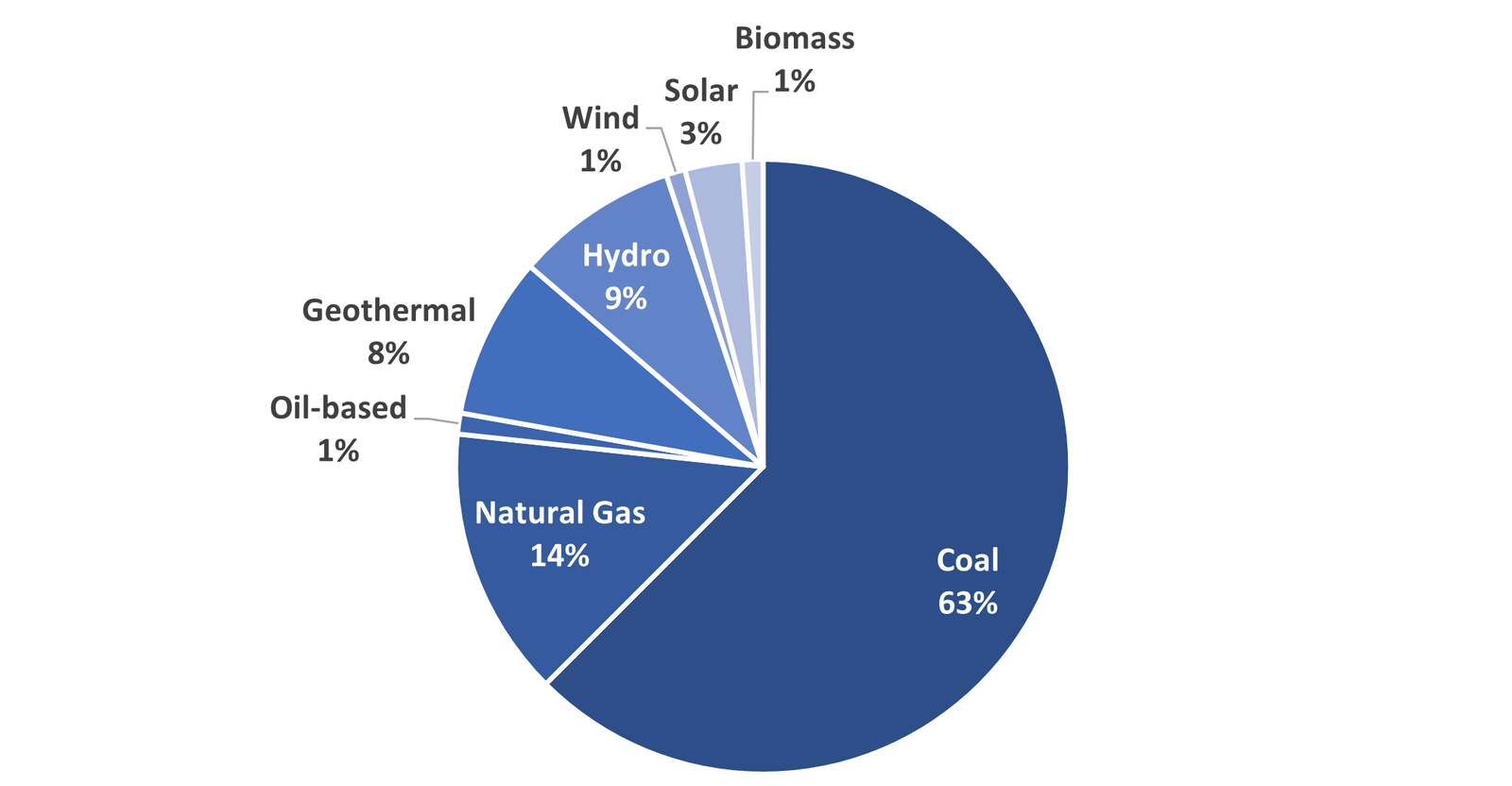
Figure 1. The total power generation in the Philippines in 20249
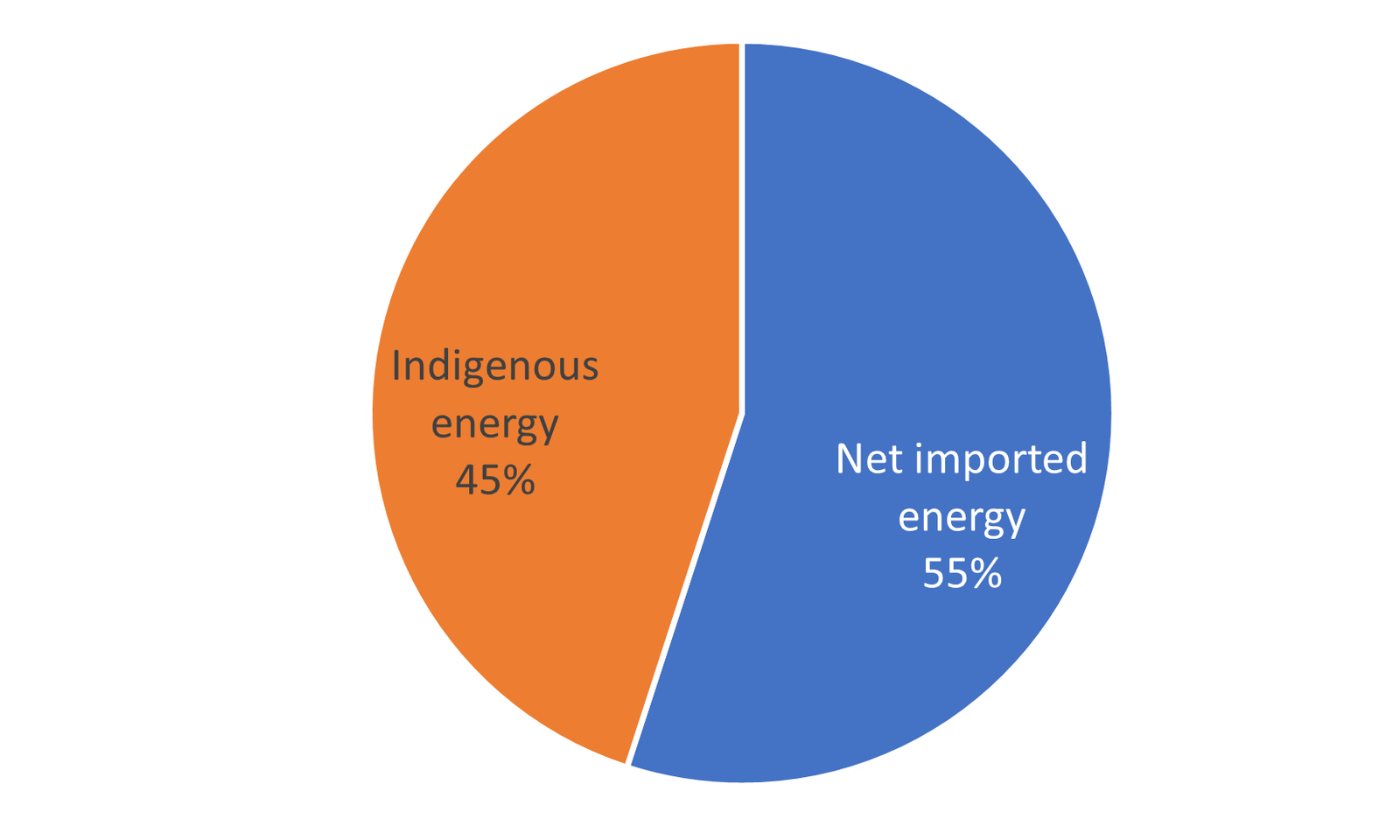
The country imports most of its fossil fuels, making the Philippines vulnerable to global fuel price fluctuations and supply disruptions2,3. About 55% of the Philippines’ total primary energy supply mix in 2024 is imported energy, while 45% is indigenous energy. This dependence on imported fuel also contributes to high electricity prices compared to other Southeast Asian countries13.
Note: Total primary energy supply (TPES) refers to the combined amount of energy derived from domestic sources (indigenous), imports from other countries, adjustments in stock levels (increase or decrease), and exports deducted from the total2.
Major Non-Renewable Energy Sources
- Coal remains the backbone of electricity generation in the Philippines, supporting large-scale power plants that operate continuously to meet base demand. However, its extensive use comes with significant environmental costs, including high greenhouse gas emissions and air pollution1,2,9,10.
- Oil is primarily used in the transport sector and in small-scale or backup power generation, especially in areas not connected to the main grid. Its role in electricity generation is limited but essential for ensuring energy access in geographically isolated regions9,12.
- Natural Gas provides a cleaner alternative to coal and is a key energy source for several power plants in Luzon. The Malampaya gas field has long supported this supply, although its expected depletion has prompted increased importation of liquefied natural gas (LNG) to maintain energy stability14,15.
| Oil | Coal | Biofuels | Natural Gas | Hydro | Geothermal | Biomass | Wind/Solar | |
|---|---|---|---|---|---|---|---|---|
| Indigenous energy | 0.3% | 12.2% | 0.6% | 2.4% | 3.9% | 13.4% | 11.4% | 0.6% |
| Net imported energy | 29.2% | 23.5% | 0.3% | 2.0% | – | – | – | – |
Figure 2. Total Primary Energy Supply Mix in the Philippines in 20242.
Regulations on Shutdown and Limitation of Non-Renewable Energy Plants
1. Coal Moratorium Policy
In October 2020, the Department of Energy (DOE) announced a moratorium on the development of new coal power plants in the Philippines. This policy means that new coal power plant proposals will no longer be approved. However, coal projects that were already approved, already made commitments for expansion, or under construction before the moratorium are still allowed to proceed6,16.
In October 2025, the DOE released an advisory where it clarified that while the moratorium stands, some coal projects may still proceed if they fall under non-coverage or exemption categories. These exemptions include coal plants for industrial parks used for their own operations, coal plants in off-grid areas, and coal plants used for mining and processing critical minerals needed for energy transition projects. New coal capacity connected to the main grid may also be allowed, but only under exceptional circumstances such as a power crisis or electricity shortage. The advisory also requires projects that were granted non-coverage to follow strict conditions. These conditions include committing to a project timeline and preparing a transition plan to shift to cleaner or renewable energy sources. Coal facilities must eventually be converted, retired, or transitioned to cleaner energy by December 31, 2060, or earlier if required by the DOE6,17.
The coal moratorium is an important step toward reducing the country’s dependence on coal and encouraging the development of renewable energy sources. The policy also aligns with the Philippines’ commitment to reduce greenhouse gas emissions and transition to cleaner energy sources.
2. Power Generator Accountability Policy
Department Circular DC2026-02-0006, also known as the Policy on Accountability of Entities Engaged in Power Generation to Ensure Sufficient, Reliable, Affordable, and Secure Supply of Energy in the Country or the Power Generator Accountability Policy, was published by the DOE in February 2026. It establishes an accountability policy for power generation companies in the Philippines. The circular requires power generation entities to maintain permits, comply with operational and environmental standards, submit accurate reports, and ensure reliable operation of power plants. The policy also introduces stricter monitoring and enforcement measures, including fines and permit suspension for non-compliance18.
Under Section 7 of this policy, the DOE issued new rules requiring non-renewable power plants to stop operating once they reach their economic life. Plant operators must prepare exit plans to retire, replace, or repurpose their facilities, possibly converting them to cleaner energy technologies. The overall goal of the policy is to ensure sufficient, reliable, affordable, and secure electricity supply while supporting the country’s energy transition7,18.
Impact on Renewable Energy Development
The limitation and possible shutdown of non-renewable energy plants are expected to have positive impacts on renewable energy development in the Philippines. Reducing coal power generation will increase the demand for renewable energy which will encourage investors to invest in renewable energy projects such as solar and wind power. Furthermore, renewable energy development can improve energy security by reducing dependence on imported fossil fuels.
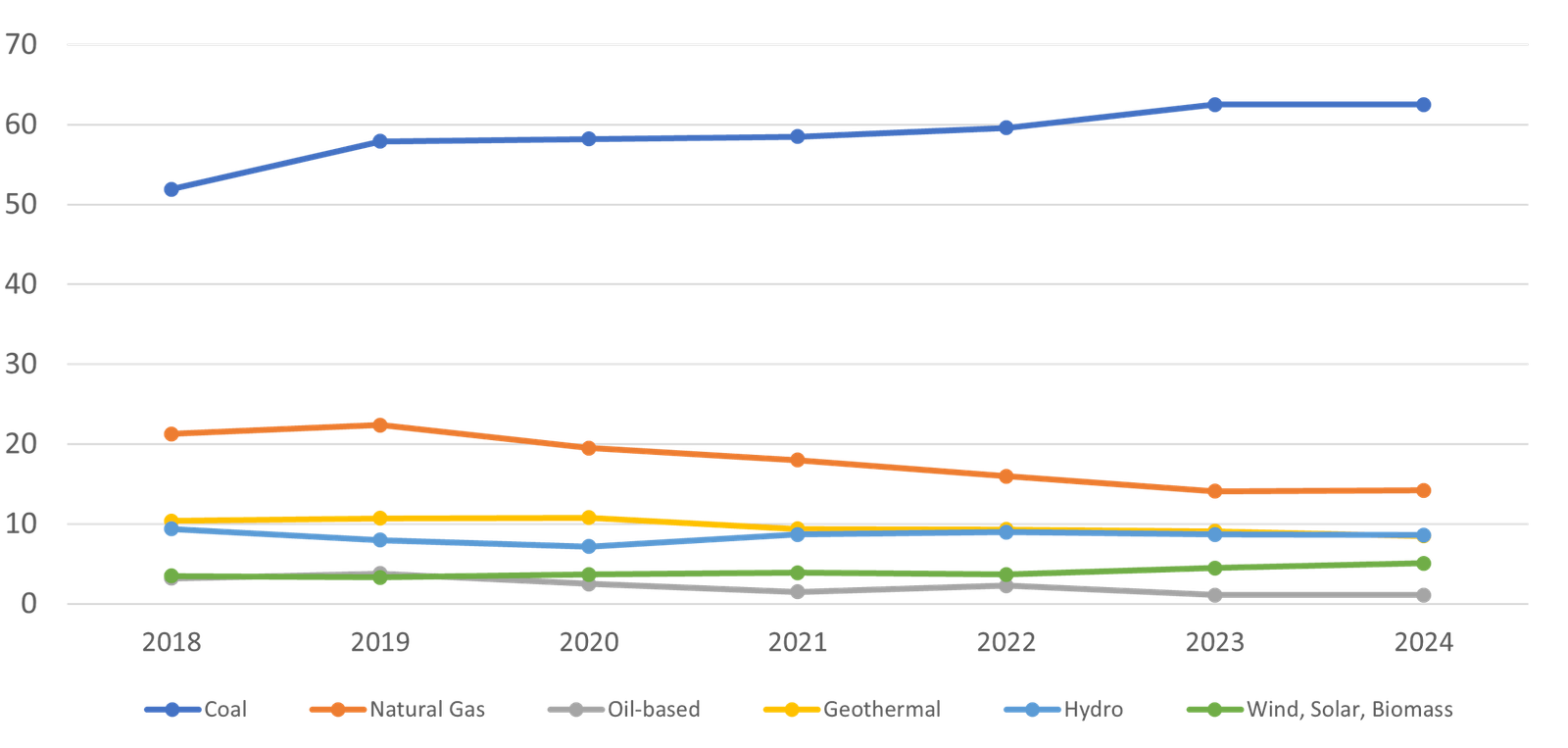
Figure 3. The total power generation (%) in the Philippines by Fuel from 2018-20242
However, based on statistics published by the Department of Energy, the share of coal in the Philippines’ total power generation mix continued to increase despite the 2020 moratorium on new greenfield coal-fired power plants (from 58.2% in 2020 to 62.5% in 2024). This trend may be explained by the fact that the moratorium is not retroactive and only applies to new greenfield applications. Additionally, the policy allows the expansion of already committed coal-fired power plants, which may have enabled energy firms to add new capacity19. Coal also remains one of the cheapest and most reliable sources for meeting electricity demand, resulting in the continued high utilization of existing plants and newly commissioned projects approved prior to the moratorium11,19. The implementation of the Power Generator Accountability Policy may support the gradual reduction of the country’s dependence on coal in the future. It can also be seen in Figure 3 that the share of renewable energy gradually increases.
Conclusion
Despite being heavily dependent on coal and imported fuel, energy security risks and climate commitments are driving the country’s transition toward renewable energy. Government policies such as the coal moratorium and the gradual phase-out of non-renewable energy plants are expected to encourage renewable energy development and increase investment in clean energy technologies. However, this transition must be carefully managed to ensure a stable and affordable electricity supply. Currently, coal’s share in the Philippines’ power generation mix has not yet decreased.
To support this transition, the Philippine government has set targets to increase the share of renewable energy to 35% by 2030 and 50% by 2040. The country has also committed to a 75% reduction and avoidance of greenhouse gas emissions by 2030 under its Nationally Determined Contribution to the Paris Agreement, although a large portion of this target depends on international support4.
Overall, the Philippines is in a transitional phase toward a more sustainable energy system, with renewable energy expected to play an increasingly important role in the country’s future energy mix.
References
- National Geographic. Nonrenewable Energy. National Geographic https://education.nationalgeographic.org/resource/non-renewable-energy/.
- Department of Energy. Department of Energy Statistics. Department of Energy https://doe.gov.ph/articles/group/statistics-3?category=Energy%20Policy%20and%20Planning&display_type=Card.
- de Vera, B. A. Philippines among Asia’s most energy-vulnerable economies—IIF. Manila Bulletin https://mb.com.ph/2026/03/18/philippines-among-asias-most-energy-vulnerable-economiesiif.
- Magoncia, G. V., Lee, D. A. X. & Torillos, R. Renewable Energy Transition in the Philippines: Trends, Opportunities, Challenges. IMF Selected Issues Paper https://www.imf.org/-/media/files/publications/selected-issues-papers/2026/english/sipea2026005.pdf (2025).
- Department of Energy. Philippine Energy Plan 2030-2050 Volume i. https://prod-cms.doe.gov.ph/documents/d/guest/pep-2023-2050-vol-i-pdf (2025).
- Galang, G. C. DOE eases further coal moratorium for self-generating, critical needs projects. Manila Bulletin https://mb.com.ph/2025/10/16/doe-eases-further-coal-moratorium-for-self-generating-critical-needs-projects (2025).
- Lectura, L. DOE sets rules on non-RE power facilities. BusinessMirror https://businessmirror.com.ph/2026/02/19/doe-sets-rules-on-non-re-power-facilities/ (2026).
- Lelis, B. Philippines remains heavily dependent on coal power plants, says IEA. The Philippine Star https://www.philstar.com/business/2025/02/18/2422190/philippines-remains-heavily-dependent-coal-power-plants-says-iea (2025).
- Department of Energy. Philippine Energy Situationer and Key Energy Statistics 2024. Department of Energy https://prod-cms.doe.gov.ph/documents/d/guest/2024-philippine-energy-situationer-and-key-energy-statistics-pdf (2025).
- International Energy Agency. Energy System of the Philippines. International Energy Agency https://www.iea.org/countries/philippines.
- Somera, D. [ANALYSIS] Why coal will remain the Philippines’ main energy driver. Rappler https://www.rappler.com/voices/thought-leaders/analysis-why-coal-will-remain-philippines-main-energy-driver/#:~:text=The%20reality%20on%20the%20ground,such%20as%20nuclear%20and%20renewables. (2024).
- Mercurio, R. Napocor mulls RE shift for small diesel plants. The Philippine Star https://www.philstar.com/business/2023/02/19/2245939/napocor-mulls-re-shift-small-diesel-plants (2023).
- Lu, B. J. Impact of high energy costs on the economy. Philippine News Agency https://www.pna.gov.ph/opinion/pieces/926-impact-of-high-energy-costs-on-the-economy (2024).
- Baclig, C. E. Natural gas law eyed to stabilize energy prices. net https://business.inquirer.net/579862/natural-gas-law-eyed-to-stabilize-energy-prices (2026).
- Philippine Daily Inquirer. Securing PH’s energy future. net https://opinion.inquirer.net/171821/securing-phs-energy-future (2024).
- Lagare, J. DOE: No total ban on developing coal plants in PH. Philippine Daily Inquirer https://business.inquirer.net/469576/doe-no-total-ban-on-developing-coal-plants-in-ph (2024).
- Department of Energy. Advisory: ‘Clarification on the Non-Coverage to the Coal Moratorium Policy’. Department of Energy https://doe.gov.ph/articles/3108877–advisory-clarification-on-the-non-coverage-to-the-coal-moratorium-policy-?title=Advisory%3A%20%22Clarification%20on%20the%20Non-Coverage%20to%20the%20Coal%20Moratorium%20Policy%22 (2025).
- Department of Energy. Department Circular No. DC2026-02-0006. Department of Energy https://doe.gov.ph/articles/3312887–department-circular-no-dc2026-02-0006?title=Department%20Circular%20No.%20DC2026-02-0006 (2026).
- Cabico, G. K. Philippines struggles to break free from coal despite renewables pledge. Dialogue Earth https://dialogue.earth/en/energy/philippines-struggles-end-coal-despite-renewables-pledge/#:~:text=Nine%20coal%2Dfired%20power%20projects,also%20arisen%2C%20according%20to%20Cabe. (2024).