On-Site Insights: Hanoi Department of Industry and Trade Holds Briefing on the 2025 Law on Chemicals and Newly Issued Decrees/Circulars
On February 1, 2026, the Hanoi Chemical Association, in cooperation with the Hanoi Department of Industry and Trade (DOIT), held a briefing and Q&A session on the “2025 Law on Chemicals and Newly Issued Decrees and Circulars.” Approximately 120 companies engaged in the manufacture, trade, use, and storage of chemicals in Hanoi attended the event. Staff from Enviapac, the local subsidiary of EnviX, also participated.
On January 17, 2026, the Government of Vietnam and the Ministry of Industry and Trade (MOIT) issued the following key implementing regulations and guidance documents for the 2025 Law on Chemicals, all of which took effect on the same day:
- Decree 24/2026/ND-CP – List of regulated chemicals falling under the scope of the Law on Chemicals
- Decree 25/2026/ND-CP – Development of the chemical industry and chemical safety/security
- Decree 26/2026/ND-CP – Detailed regulations and guidance on chemical activities and hazardous chemicals in products/goods under the Law on Chemicals
- Circular 01/2026/TT-BCT – Detailed provisions and implementation guidance for certain articles of the Law on Chemicals and Decree 26/2026/ND-CP
- Circular 02/2026/TT-BCT – Implementation guidance for the Law on Chemicals and Decree 25/2026/ND-CP
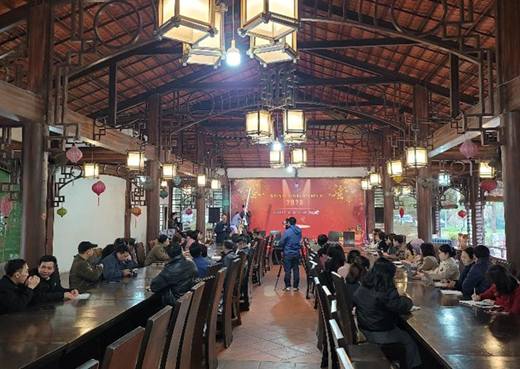

Photo by EnviX
A representative from the Safety and Environmental Technology Division of the Hanoi DOIT attended the briefing and responded to questions from companies regarding implementation of the new decrees.
Key questions raised in the seminar are the following:
- Q1: When applying for an import permit for specially controlled chemicals, must companies submit an invoice?
- Q2: For mixtures that do not fall under conditional chemicals or specially controlled chemicals as defined in Annex II and Annex III of Decree 24/2026/ND-CP, is the exemption under Decree 26/2026/ND-CP (component content below 0.1%) still required?
- Q3: Do the new import/export procedures apply to “on-the-spot export” (xuất khẩu tại chỗ) and “on-the-spot import” (nhập khẩu tại chỗ)?
- Q4: Must annual chemical activity reports be submitted to MOIT?
- Q5: Can companies keep chemical composition information confidential when importing chemicals?
- Q6: Companies providing storage services for conditional or specially controlled chemicals must declare the maximum storage volume when applying for certificates. However, actual volumes vary depending on customer demand. How should this be handled?
- Q7: Must chemical accident prevention and response plans prepared by warehouse operators list all chemicals stored on behalf of customers?
- Q8: Companies holding valid certificates for manufacturing/trading conditional chemicals may continue using them until December 31, 2027. What happens if the warehouse registered by the company fails to obtain a chemical storage service certificate?
- Q9: If a company updates (amends) an existing certificate for manufacturing/trading conditional chemicals, will the revised certificate expire on December 31, 2027?
- Q10: If a warehouse lease contract is valid for only three years, will a newly issued certificate/permit still be valid for the standard five-year period?
- Q11: Can product names for chemicals differ across documents such as certificates/permits, SDSs, and invoices?
- Q12: Export permit applications for industrial precursors require approval documents from the Ministry of Public Security, and obtaining these approvals takes time. Companies therefore find it difficult to receive permits within seven days of submitting applications.
The responses from the authorities to each of the above questions are as below.